Electrical cardioversion
Electrical cardioversion is a medical procedure performed under light general anesthesia, during which an electrical impulse is delivered through the chest and heart muscle. The purpose of the procedure is to restore the heart’s normal rhythm (sinus rhythm) using an electric shock. The procedure is mainly used to treat rapid and irregular heart rhythm disturbances such as atrial fibrillation or atrial flutter, and more rarely certain life-threatening ventricular arrhythmias. You will be referred for this procedure by your family doctor or cardiologist. The procedure is carried out by a doctor (cardiologist or anesthesiologist) and a nurse.
Contraindications for the procedure
The procedure is contraindicated if:
- your heart has been out of rhythm for more than 24 hours and you have not been on anticoagulant therapy beforehand, or you have not taken these medications as prescribed;
- it is known that there is a clot in the left atrium of your heart.
Preparation at home
Before the procedure, you must refrain from eating and drinking for at least six hours; this includes not chewing gum or smoking. If you have eaten or drunk before the procedure, stomach contents may enter your airways during anesthesia and cause life-threatening complications.
If you are using medications such as semaglutide (Wegovy, Ozempic) or tirzepatide (Mounjaro), you must inform your doctor. These medications slow gastric emptying, and the fasting period should therefore be longer in order to prevent aspiration of gastric contents. Your doctor will tell you whether or which of your ohter regular medications you may take before the procedure.
Preparation in the hospital
The procedure is usually performed on the day you arrive at the hospital. An intravenous cannula will be inserted for administering medications, and blood tests will be taken. Before electrical cardioversion, a transesophageal ultrasound examination may be performed to rule out blood clots in the heart that could cause life-threatening complications during the procedure. The need for this will be determined by your doctor.
Course of the procedure
The procedure takes place in the intensive care unit. Monitoring leads will be attached to track your heart rate, breathing, and blood pressure. An oxygen mask will be placed on your face to ensure adequate oxygen supply during anesthesia.
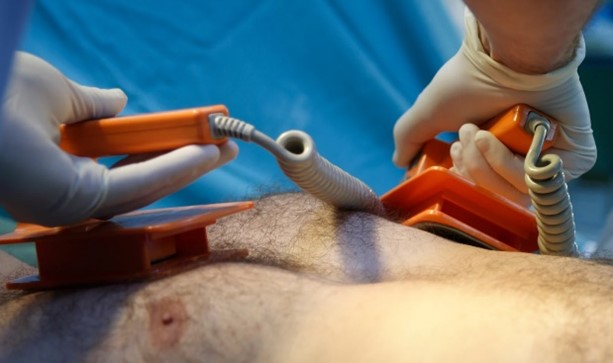
Defibrillator pads will be placed on your chest. Through the IV cannula, you will receive a short-acting anesthetic that will make you fall asleep. While you are asleep, an electric shock will be delivered. If normal rhythm is not restored, the shock may be repeated. In some cases, normal heart rhythm cannot be restored even with cardioversion.
After the procedure
You will wake up from anesthesia within 5–10 minutes. You may feel drowsy or confused—this is normal. After the procedure, you will be observed in the hospital for at least 2–3 hours, or longer if needed, possibly until the next morning. After two hours you may eat, drink, and walk.
Because of the medications administered during the procedure, you may be more drowsy than usual; therefore, you must not drive a car or operate large electrical machinery for 24 hours. It is not recommended to go home alone from the hospital.
Possible complications and risks
Although electrical cardioversion is generally safe, the following risks may occur:
- failure to restore normal heart rhythm;
- temporary arrhythmias, which usually resolve on their own;
- low blood pressure, which typically improves within a short time;
- skin irritation or burns at the pad sites, which heal without intervention;
- in very rare cases, a persistent heart arrhythmia requiring additional treatment;
- heart failure;
- cardiogenic shock (reduced blood flow to tissues due to impaired heart pump function);
- life-threatening arrhythmias, which may result in death.
Home selfcare
You may resume your normal daily activities after returning home. After 24 hours you may return to activities requiring physical exertion.
Sometimes the procedure needs to be repeated or your treatment plan adjusted. The doctor may prescribe blood thinners for several weeks to prevent the formation of clots after the restoration of heart rhythm.
When to contact a doctor
- You experience severe shortness of breath
- Your exercise tolerance has significantly decreased
- Symptoms of an abnormal heart rhythm return
Compiled by: Cardiointensive Care Department of the Heart Clinic
2025