ECG STRESS TEST
An ECG stress test is an examination used to assess how the heart functions during physical exertion. The test is performed on a treadmill or a bicycle ergometer. The purpose of the test is to detect or rule out possible cardiovascular problems.
A stress test evaluates:
- exercise tolerance,
- heart rhythm and possible arrhythmias,
- blood pressure and heart rate response to exertion,
- blood supply to the heart muscle,
- the relationship between symptoms and physical activity,
- recovery time of ECG, pulse, and blood pressure.
Patients are referred for a stress test by a family physician (for initial evaluation), an internal medicine specialist or pulmonologist (to assess exercise tolerance and symptoms), or a cardiologist (to evaluate ischaemia, arrhythmias, and treatment effectiveness).
Indications for the test
- Suspected coronary artery disease
- Clarification of diagnosis
- Arrhythmias during exertion
- Monitoring treatment or recovery
- Assessment of blood pressure response
- Determining the relationship between symptoms (e.g., shortness of breath) and physical activity
Contraindications for the test
- Acute myocardial infarction or inflammatory heart disease
- Unstable angina
- Severe arrhythmias
- Symptomatic severe aortic stenosis
- Decompensated heart failure
- Markedly elevated blood pressure before the test
- Limited mobility
PREPARATION FOR THE STRESS TEST
- Wear comfortable sportswear and indoor shoes.
- Eat a light meal about 2 hours before the test.
- Bring a list of all medications you take.
- Do not discontinue any medication without your doctor’s instructions. Consult your doctor if you need to skip any medicines before the test (e.g., beta-blockers).
- Shower facilities (including towels) are available after the test.
Performing the stress test
The ECG stress test is performed on a treadmill or bicycle ergometer. ECG electrodes will be attached to monitor your heart’s electrical activity. Blood pressure, heart rate, and oxygen saturation will be monitored throughout. Physical workload is increased gradually.
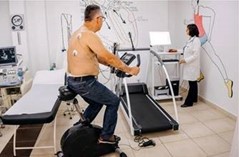
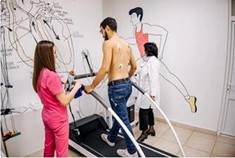
The test usually continues until you become fatigued, develop symptoms, or reach the target workload (typically 6–12 minutes). A doctor or nurse monitors your condition throughout and will stop the test if necessary.
During the test, your heart rate and breathing will increase — this is normal. You may experience fatigue, heaviness in the legs, sweating, slight shortness of breath, or chest discomfort. These symptoms are usually temporary and not dangerous, but please inform staff immediately if you notice them.
After completing the test, your recovery will be monitored. You may feel mild fatigue or sweating. More serious side effects (such as arrhythmias or severe pain) are rare, and the staff will intervene promptly if needed.
Stress test results
The results of the stress test are analysed by a cardiologist or the specialist performing the examination immediately after the test. A written report will be sent to the doctor who referred you for the test (e.g., your family physician or specialist), who will explain the results and the further treatment plan.
All results are also entered into the National Health Portal and the Medical Imaging Bank.
In the case of urgent findings (e.g., significant arrhythmias or signs of ischaemia), you will be contacted or referred for further treatment as necessary.
The Heart Clinic of Tartu University Hospital
2025