Electrocardiogram (ECG)
An ECG, or electrocardiogram (referred to on the referral as a computer-analyzed ECG), is an examination that measures the electrical activity of the heart muscle and displays it as a graphical recording. An ECG provides valuable information about your heart health—for example, heart rhythm, heart rate, electrical conduction, and changes associated with various diseases.
The examination assesses:
- heart rhythm and possible arrhythmias
- disturbances in the blood supply to the heart muscle
- myocardial infarction (acute heart attack or previously sustained myocardial infarction)
- overload and enlargement of the heart chambers
Indications for the examination
- various arrhythmias;
- symptoms: dizziness, chest pain, palpitations, fainting, seizures;
- hypotension, hypertension;
- detection of ischemia or myocardial infarction (including previous);
- electrolyte imbalances;
- monitoring the cardiac effects of medications;
- preoperative assessment for anesthesia;
- postoperative assessment.
Preparing for the examination
Please dress in a way that allows easy exposure of the upper body and lower legs. Avoid wearing pantyhose.
Performing the examination
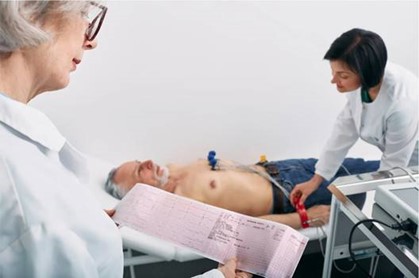
During the examination, you will need to lie on your back. Ten vacuum-based electrodes will be placed on your body: 2 on the arms, 2 on the legs, and 6 on the chest. To obtain a high-quality recording, do not talk or move during the examination, and try to remain as relaxed as possible. The procedure lasts 5–10 minutes.
After the electrodes are removed, marks may remain on the skin; these will disappear on their own after some time. The special solution used to improve electrode contact may cause irritation on more sensitive skin. Therefore, please inform the staff if you have any allergies or sensitivities to any substances.
Receiving the results
You do not need to wait for the results after the examination. A physician will evaluate the ECG and upload the report to the Patient Portal or Imaging Bank. In the case of an acute condition (persistent chest pain, myocardial infarction), repeated ECG recordings at short intervals may be necessary.
Prepared by: Clinical Physiology Department nurses Andra-Ingre Kõiv and Elve Nykänen
2025