Paediatric Intensive Care Unit - Information for Parents
Introduction
A child’s hospitalisation, especially in the intensive care unit, can be a worrying and emotionally challenging time for the whole family. The purpose of this information leaflet is to introduce you to the organisation of the paediatric intensive care unit, its staff and the equipment used here. We aim to help you better understand what happens in intensive care, reduce anxiety caused by uncertainty, and support you in staying by your child’s side and contributing to their recovery.
If you have any questions or need additional information, please do not hesitate to contact the unit staff. We are here to provide your child with the best possible treatment and care and to support you during this difficult time.
Your Child in the Intensive Care Unit
The paediatric intensive care unit treats patients aged 0–19 years who are critically ill or require continuous monitoring and specialised care.
Each child stays in a private family room, where a family member can remain with the child and participate in their care.
Special monitoring equipment is used during intensive care, and examinations and procedures are performed to monitor and support the functioning of the child’s vital organs, even in cases of severe illness or medical conditions.
To ensure the child’s safety, all family rooms are equipped with a central patient monitoring system, video surveillance and a staff call system. The camera feed is displayed at the nursing station, allowing staff to monitor the child’s condition in real time. Video footage is not recorded or stored.
The duration of treatment and recovery varies from child to child and depends on the child’s illness and health condition.
The Intensive Care Team
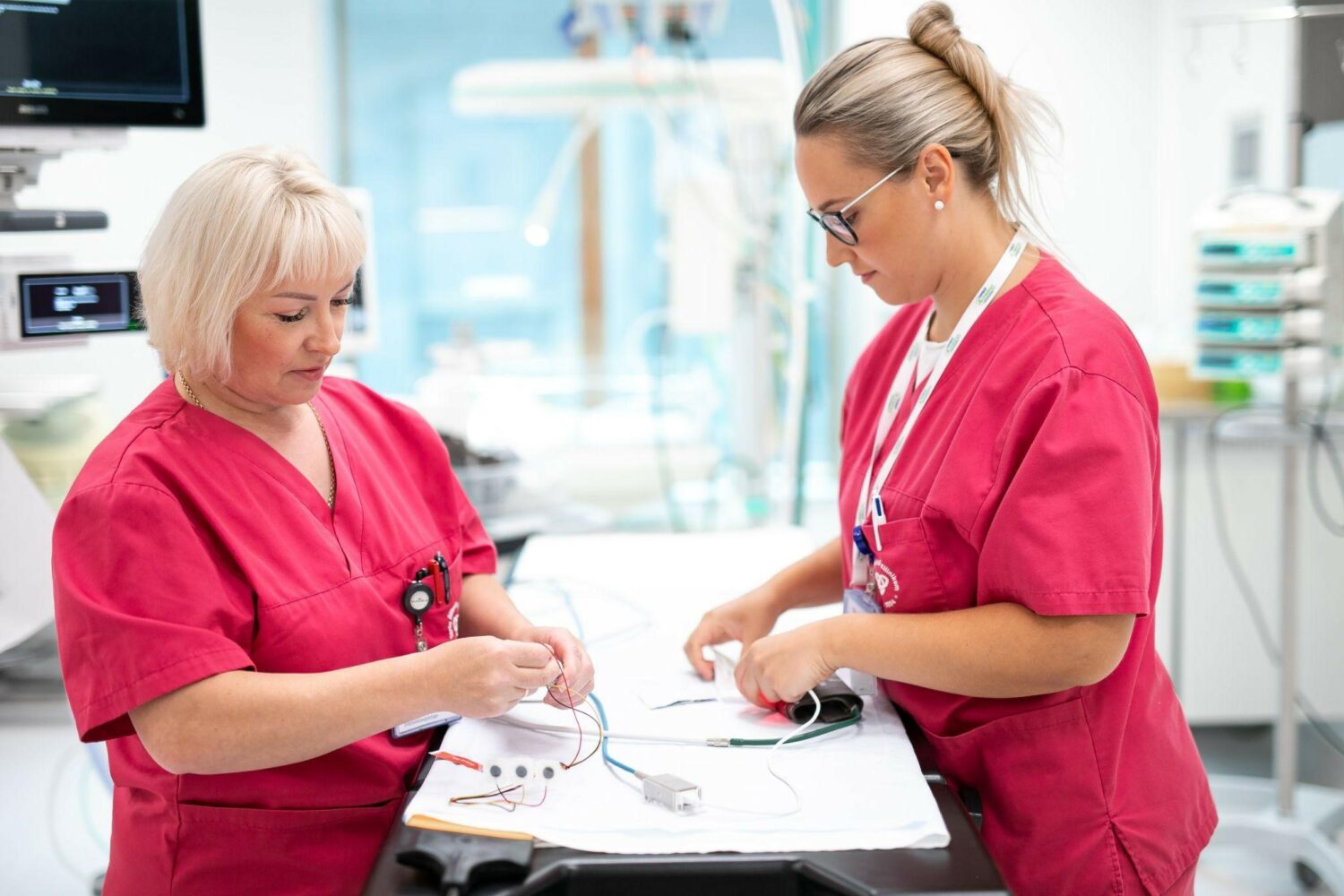
The paediatric intensive care unit is staffed around the clock. A team consisting of doctors, nurses and healthcare assistants is responsible for the child’s treatment and care. All staff members wear work uniforms and name badges indicating their job titles.
There is no single designated attending physician for a child in the intensive care unit. The on-duty intensive care physician is responsible for the child’s treatment and treatment plan. Intensive care nurses continuously monitor the child’s health, participate in the treatment process and support the child’s vital functions.
When necessary, specialists from other fields are also involved in the child’s treatment and recovery, including physiotherapists, speech and language therapists, psychologists and social workers. Chaplains, peer support counsellors, midwives, cleaning and catering staff, and other specialists also contribute to the daily work of the unit. Students undertaking healthcare education may also be present in the unit.
The Parent’s Role in the Care Team
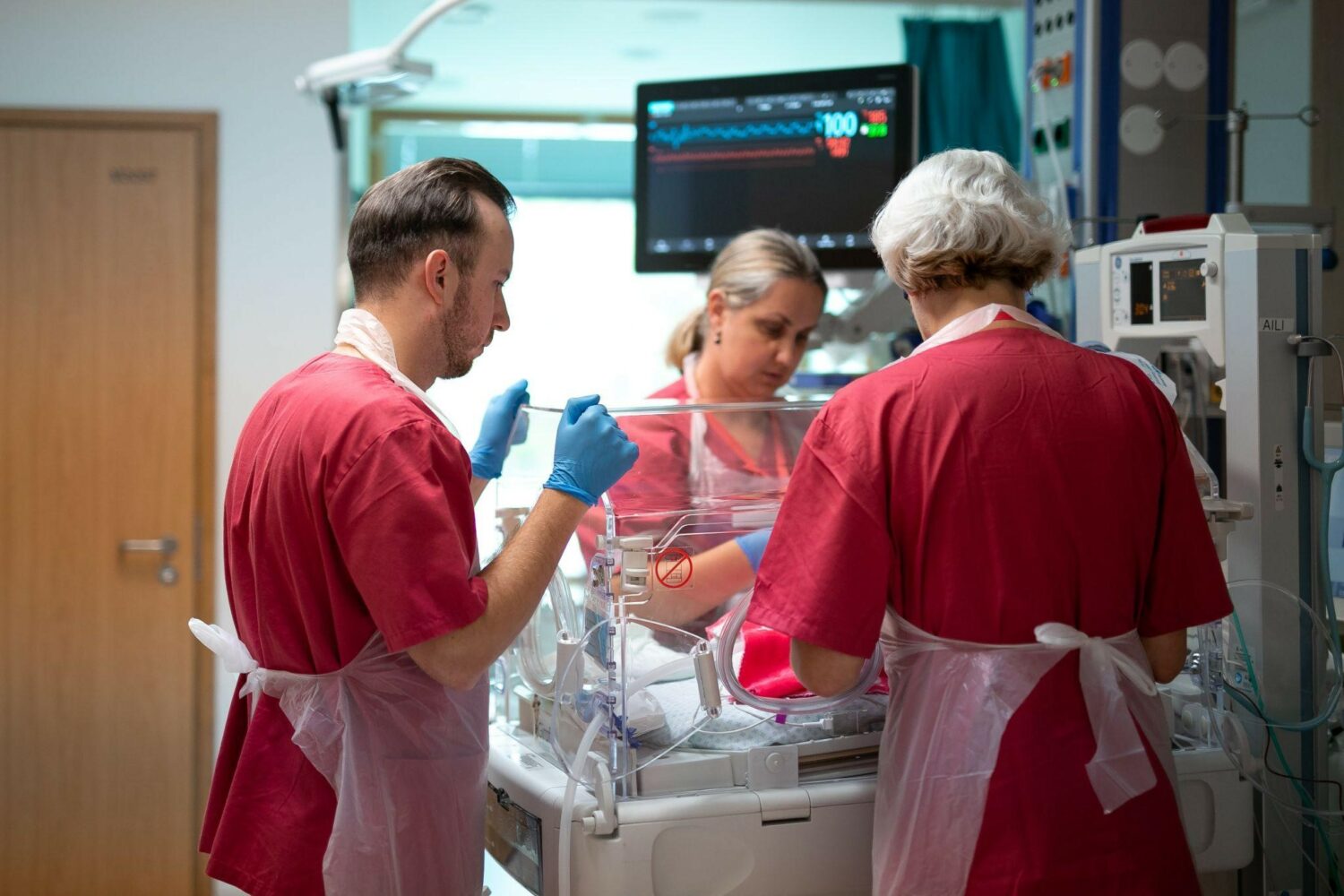
We consider parents and other family members to be an important part of the child’s care team. The presence of loved ones helps children feel safer and supports their emotional well-being during hospitalisation.
Parents may stay with their child around the clock. Your presence helps reduce your child’s anxiety and fear and supports their adjustment to the hospital environment.
Whenever possible, we encourage parents to participate in their child’s daily care, for example by feeding and comforting the child, changing nappies, repositioning the child and assisting with personal hygiene. Opportunities to participate in care depend on the child’s health condition and can be discussed with the care team.
Parental involvement helps maintain the child’s sense of security and familiar closeness with loved ones, while strengthening cooperation between the family and the care team.
Taking Care of Yourself
To provide the best possible support for your child, it is important to look after your own well-being as well. Having a child in the intensive care unit can be emotionally and physically exhausting for both the child and their loved ones.
Allow yourself and other family members to take breaks and share the responsibilities associated with caring for the child. Try to eat regularly, drink enough fluids, and find opportunities to rest and recover. Do not hesitate to ask for help or support from your loved ones or hospital staff when needed.
Your well-being is important for your child, too.
Visiting Your Child and Requesting Information
Parents and legal guardians may stay with their child around the clock.
Other family members and loved ones may visit the child with the consent of a parent or legal guardian. We recommend arranging visits with the unit staff in advance. Visiting hours are generally from 10:00 to 20:00.
Visitors must be healthy and must not have recently been in contact with people suffering from infectious diseases. If you are unwell or suspect that you have been exposed to an infectious disease, please inform the unit staff before visiting.
If you would like to bring other children in your family to visit, please discuss this with the staff in advance. It is important to prepare the child for the visit and ensure that they want to come.
In certain situations, additional personal protective equipment may be required when visiting your child, such as a face mask, protective apron, gown or protective gloves. The unit staff will explain how to use these if necessary.
You can obtain information about your child’s condition and treatment from the on-duty doctor and nurse around the clock. The most suitable times to request information by telephone are 09:00–14:00 and 17:00–21:00.
Clothing and Storage of Personal Belongings
When entering the unit, please leave your outdoor clothing in the wardrobe lockers located outside the unit and use indoor footwear or disposable shoe covers.
The lockers intended for storing outdoor clothing and footwear can be opened and locked using a wristband provided by the unit staff. Please return the wristband to the staff when your child is discharged from the unit.
Hand Hygiene and Infection Prevention
Children receiving intensive care may be more susceptible to infections than usual. If you have symptoms of illness or have recently been in contact with someone suffering from an infectious disease, please inform the unit staff. Depending on the staff’s instructions, you may need to use personal protective equipment or stay away from your child until you have recovered.
To reduce the risk of infection, please follow hand hygiene requirements and disinfect your hands according to the unit’s instructions.
Please do not bring flowers or plants into the room. Water from flower vases may come into contact with electrical equipment, and plants may cause allergic reactions.
Privacy
Please respect the privacy of everyone in the unit and focus on your own family member. Photography and video recording must be agreed upon with the staff in advance and must not infringe on the privacy of other patients, their family members or staff.
Food, Drinks and Personal Items
All necessary clothing and care supplies for your child, such as nappies, washing products, creams and other similar items, are provided in the unit during your child’s hospital stay.
Please label a newborn’s personal belongings, such as a comfort cloth, blanket or pacifier, with the child’s name to prevent them from getting lost.
During the hospital stay, personal devices and items for entertainment may also be used, such as mobile phones, tablets, laptops, books or games, to help occupy the child according to their age and abilities.
If you would like to bring food or drinks for your child, please discuss this with the staff in advance. Depending on the child’s health condition, dietary or fluid restrictions may apply. It is also important for nurses to be able to document the amounts of food eaten and fluids consumed by the child.
Transfer to Another Unit
The length of a child’s stay in intensive care and their recovery depend on their health condition. Once the child’s condition has stabilised and intensive care is no longer required, they will be transferred to a general ward or referred to another healthcare facility for further treatment.
Whenever possible, parents or legal guardians will be informed of the transfer in advance and given an explanation of the arrangements for further treatment.
Feedback
Your feedback is important to us and helps us improve our work and the care we provide. Parents and legal guardians can share their opinions about the healthcare services received, as well as express their gratitude, suggestions or concerns.
Feedback can be provided verbally or in writing. Written feedback, expressions of gratitude, suggestions or complaints can be submitted using the feedback form on the website of Tartu University Hospital.
The form is available at:
Equipment and Devices Used in Intensive Care
You may see various medical devices and equipment beside your child that may initially seem unfamiliar or frightening. They are used to monitor the child’s health, support vital functions and provide treatment. If you would like to know what a particular device is used for, or if anything concerns you, please do not hesitate to ask the unit staff for an explanation.
- Monitor – a device whose screen displays the child’s vital signs, such as heart rate, blood oxygen saturation, blood pressure and respiratory rate. The monitor allows staff to continuously observe the child’s condition and detect possible changes. If the monitored measurements fall outside the set limits, the monitor sounds an alarm. An alarm does not always mean that the child’s condition is dangerous or has deteriorated. Staff always assess the situation and decide whether intervention is necessary. The monitor readings are also displayed on the central patient monitoring system, allowing staff to observe the child’s condition from the nursing station.
- Syringe pump / infusion pump – a device used to administer fluids or medicines into the child’s vein. It allows very precise administration of medication and fluids, including over extended periods when necessary.
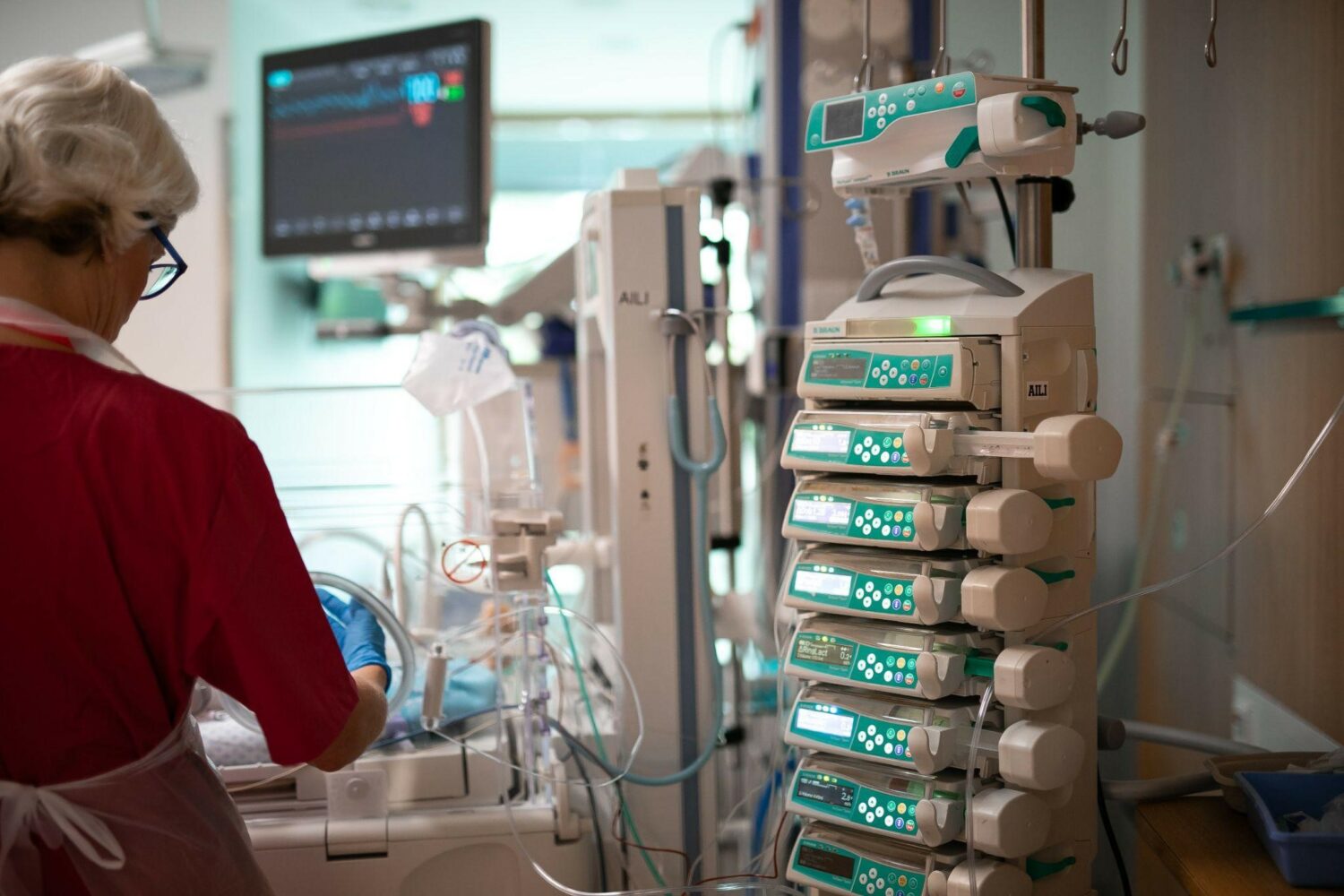
- Incubator – a specialised cot used primarily to care for premature newborns and other newborns requiring specialised care. It allows the temperature and humidity of the environment surrounding the baby to be adjusted and, when necessary, the oxygen concentration to be regulated. It also helps reduce environmental noise. Using a cover to dim the light helps reduce light exposure and create a suitably dim environment for a premature newborn.
- ECG electrodes – sensors placed on the chest that measure electrical activity, heart rate and respiratory rate.
- Oxygen saturation (SpO₂) – an important indicator used to monitor the child’s breathing and overall condition by assessing how well the blood is supplied with oxygen. It is measured using a special sensor placed, for example, on a finger, foot or earlobe.
- Apnoea – a pause in breathing during which the child’s breathing temporarily stops or becomes inadequate. In premature newborns, this may be related to the immaturity of the mechanisms that regulate breathing. Apnoea may be accompanied by a slowing of the heart rate and a decrease in blood oxygen saturation. Sometimes the child’s skin may become pale or bluish.
- Sepsis – a life-threatening condition in which the body’s response to an infection causes dysfunction of the organs. Sepsis can worsen rapidly and requires urgent treatment.
- Sedation and anaesthesia – medicines are administered to the child to reduce anxiety, discomfort and pain and, when necessary, to induce sleep or unconsciousness. Sedation is used to calm the child and help them tolerate procedures. During anaesthesia, the child is placed in a state of deep unconsciousness so that necessary procedures or treatment can be carried out safely.
- Endotracheal tube – a tube inserted through the mouth or nose into the trachea to keep the airway open and allow a ventilator to support or take over the child’s breathing. Because of the endotracheal tube, the child cannot speak or cry audibly in the usual way.
- Intubation – a procedure in which an endotracheal tube is inserted into the trachea to keep the airway open and allow breathing to be supported by a ventilator when necessary.
- Extubation – removal of the endotracheal tube when the child can breathe sufficiently well independently and removal of the tube is considered safe given the child’s condition.
- Ventilator – a machine that supports breathing or breathes for the patient through an endotracheal tube, tracheostomy tube or face mask.
- Mechanical ventilation – the support or replacement of breathing using a ventilator. It is used when the child cannot breathe effectively enough on their own or needs additional respiratory support.
- Tracheostomy tube – a tube inserted into the trachea through an opening created in the neck, called a tracheostomy. It is used, among other reasons, when a child requires long-term airway access or respiratory support.
- CPAP (Continuous Positive Airway Pressure) – a method of respiratory support in which continuous positive pressure is maintained in the child’s airways to prevent the alveoli from collapsing during exhalation. A nasal mask or nasal prongs are usually used to deliver air or an oxygen-enriched gas mixture into the airways.
- High Flow (high-flow nasal therapy) – a method of respiratory support in which heated and humidified air or an oxygen-enriched gas mixture is delivered into the child’s airways at a high flow rate through nasal cannulae. This helps support the child’s breathing and reduce the work of breathing.
- Surfactant – a substance that helps keep the lung alveoli open and enables effective gas exchange within the alveoli.
- NAVA catheter – a specialised catheter inserted into the stomach through the nose or mouth. Its electrodes measure the electrical activity of the diaphragm, the main muscle involved in breathing. Based on this information, the ventilator adjusts respiratory support to match the child’s own breathing effort.
- Gastric tube (nasogastric/orogastric tube) – a tube inserted into the stomach through the nose or mouth for feeding the patient and/or administering medicines.
- Suctioning – the removal of secretions or other fluids from areas such as the mouth, throat or airways.
- Inhalation device (nebuliser) – a device used to administer medicines as an aerosol for inhalation. Depending on the device and the solution used, inhalation may also help moisturise the airways.
- Peripheral intravenous cannula – a short cannula inserted into a superficial vein for administering medicines and fluids.
- Arterial cannula – a cannula inserted into an artery to measure blood pressure and obtain blood samples for testing without repeated needle punctures.
- Central venous catheter (CVC) – a catheter intended for longer-term use through which medicines, fluids and, when necessary, parenteral nutrition solutions can be administered.
- Peripherally inserted central catheter (PICC) – a thin catheter inserted through a peripheral vein, with its tip extending into a large vein. It is used primarily for the long-term administration of medicines and fluids.
- Umbilical catheter – a catheter inserted into a newborn’s umbilical vein to administer fluids, medicines and nutrients and to obtain blood samples for testing.
- Parenteral nutrition – the administration of nutrients directly into a vein. It is used when the child cannot receive sufficient nutrients by mouth or through the gastrointestinal tract, or when feeding through the gastrointestinal tract is not possible.
- Urinary catheter – a catheter inserted into the bladder to drain and/or collect urine.
- Drain – a thin tube inserted into a body cavity or tissue to remove excess fluid, blood or air.
- Phototherapy (light therapy) – treatment using a special light to reduce jaundice in newborns. The light helps the body break down and eliminate bilirubin.
- Skin-to-skin contact (Kangaroo Care) – direct skin-to-skin contact between a parent and a newborn, during which the baby is placed against the parent’s bare chest. This has many positive effects on the well-being of both the baby and the parent. For example, it helps maintain the baby’s body temperature and physiological stability, promotes closeness with the parent and supports breast milk production in the mother.
Paediatric Intensive Care Unit
L. Puusepa 8, Building M, 3rd floor
On-duty doctor: 7319552
On-duty nurse: 7319553
Prepared by: Kertu Lepla, Mari Kallastu
2026